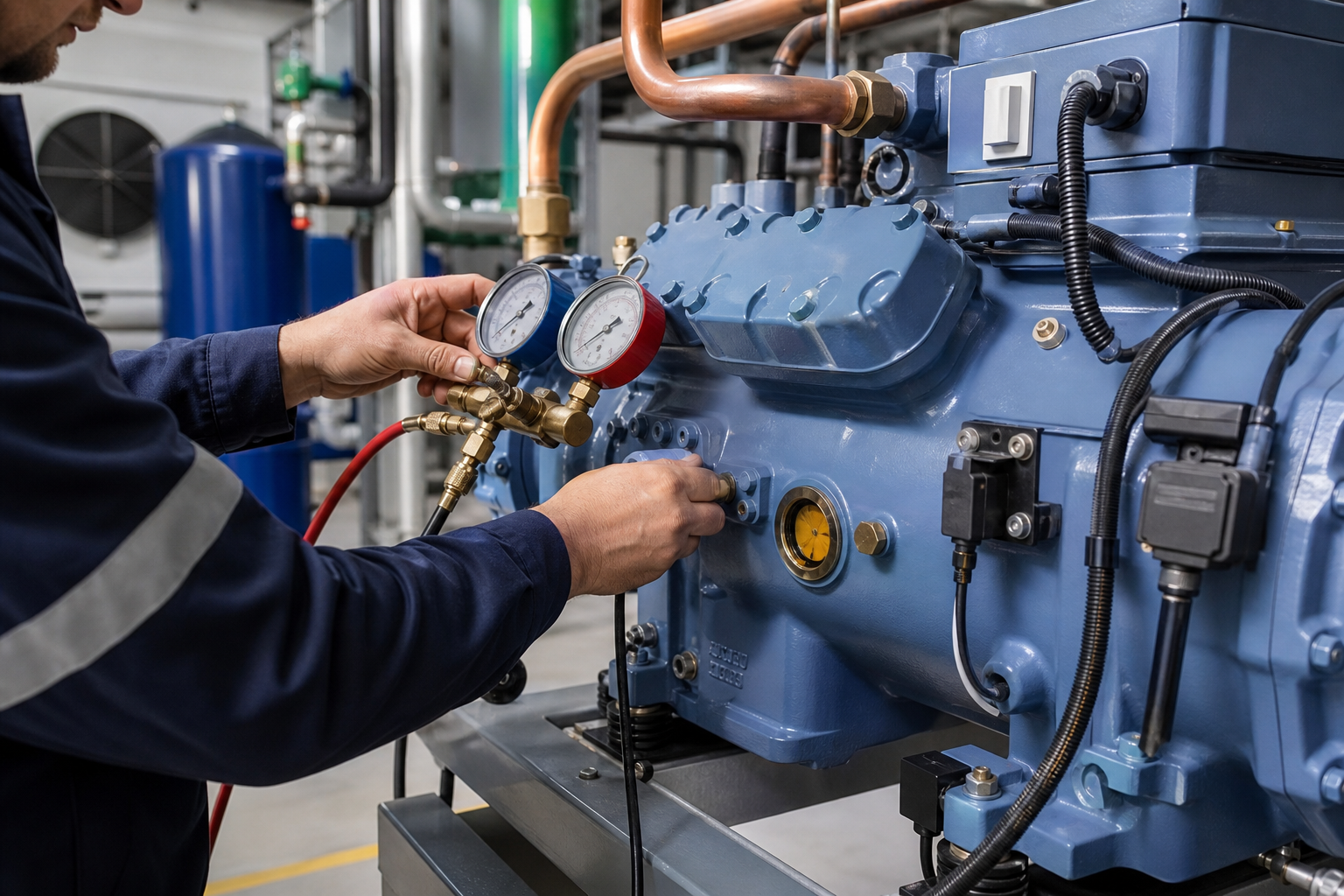
Oil pressure alarms on Bitzer semi-hermetic compressors are among the most common causes of emergency service on cold rooms, condensing units and industrial refrigeration packs. Because the safety control stops the compressor, the immediate reaction is often to assume that the compressor itself is finished. In practice, many Bitzer oil pressure trips begin elsewhere: refrigerant migration, oil dilution, clogged oil circuits, poor return conditions or even control wiring problems. A disciplined diagnosis helps service teams avoid unnecessary replacement and restore uptime faster.
1. Confirm whether the trip is a true loss of oil differential
The first step is to understand exactly what opened the circuit. On many Bitzer installations, the complaint is described simply as oil alarm, but the real event may be a delayed differential switch, a faulty module, a loose connection or a timer issue. Before condemning the oil pump or compressor internals, verify the actual differential reading, the control logic and the time delay behavior. A false trip and a real lubrication problem can produce the same downtime but require completely different action.
2. Inspect oil level, foaming and refrigerant dilution in the crankcase
One of the most frequent root causes is diluted oil after migration or floodback. If liquid refrigerant reaches the crankcase, the oil can foam heavily at startup and lose its ability to maintain stable differential pressure. On a Bitzer semi-hermetic compressor, a weak or unstable sight glass reading during start and pull-down often points to a system condition, not immediately to internal pump failure. Checking oil level, oil appearance and startup behavior together usually reveals more than looking at the alarm alone.
3. Check oil filter condition, pump performance and restrictions in the oil circuit
Blocked filters, debris after burnout, dirty oil passages or wear in the oil pump can all reduce effective oil pressure. If the compressor has suffered previous contamination, the oil circuit may still be carrying residue that was never cleaned properly. In that case, replacing the control without cleaning the oil side only delays the next trip. Differential oil pressure on Bitzer compressors should always be read in the context of oil cleanliness and service history.
4. Review suction conditions, return gas and system oil return
Many oil pressure problems are created by the system around the compressor. Floodback, oversized suction lines, poor riser design, unstable evaporator load or long off cycles can all disturb oil behavior. A Bitzer compressor that repeatedly trips on oil pressure after restart may be warning about return gas conditions or oil management problems elsewhere in the circuit. If the plant has multiple evaporators or long pipe runs, oil return logic becomes just as important as the compressor itself.
5. Verify wiring, control settings and restart sequence
Incorrect wiring of the differential switch, weak terminals, wrong replacement controls or a restart sequence that does not protect the compressor long enough can generate repeat oil alarms. This is especially relevant after recent service work, when parts may have been changed quickly to get the plant running again. A proper check should include actual wiring, delay settings and the sequence that occurs between startup, pressure equalization and alarm reset.
6. Replace the compressor only after the root cause is clear
If a Bitzer semi-hermetic compressor really has internal wear or a damaged oil pump, replacement may be necessary. But replacing the compressor before confirming the real cause exposes the next unit to the same unresolved condition. When oil pressure trips are linked to migration, contamination or poor return, the system must be corrected first. The commercial benefit of a structured diagnosis is simple: less repeat downtime, fewer unnecessary compressor orders and a better chance of restoring reliable refrigeration on the first intervention.
The practical takeaway is that a Bitzer oil pressure alarm should be treated as a system warning, not only as a compressor verdict. Confirm the true differential problem, inspect oil condition, review the oil circuit, and verify return gas and controls before ordering a replacement. When a new compressor, spare parts or technical support are still required, that diagnosis also makes the quote more accurate and protects the next startup.