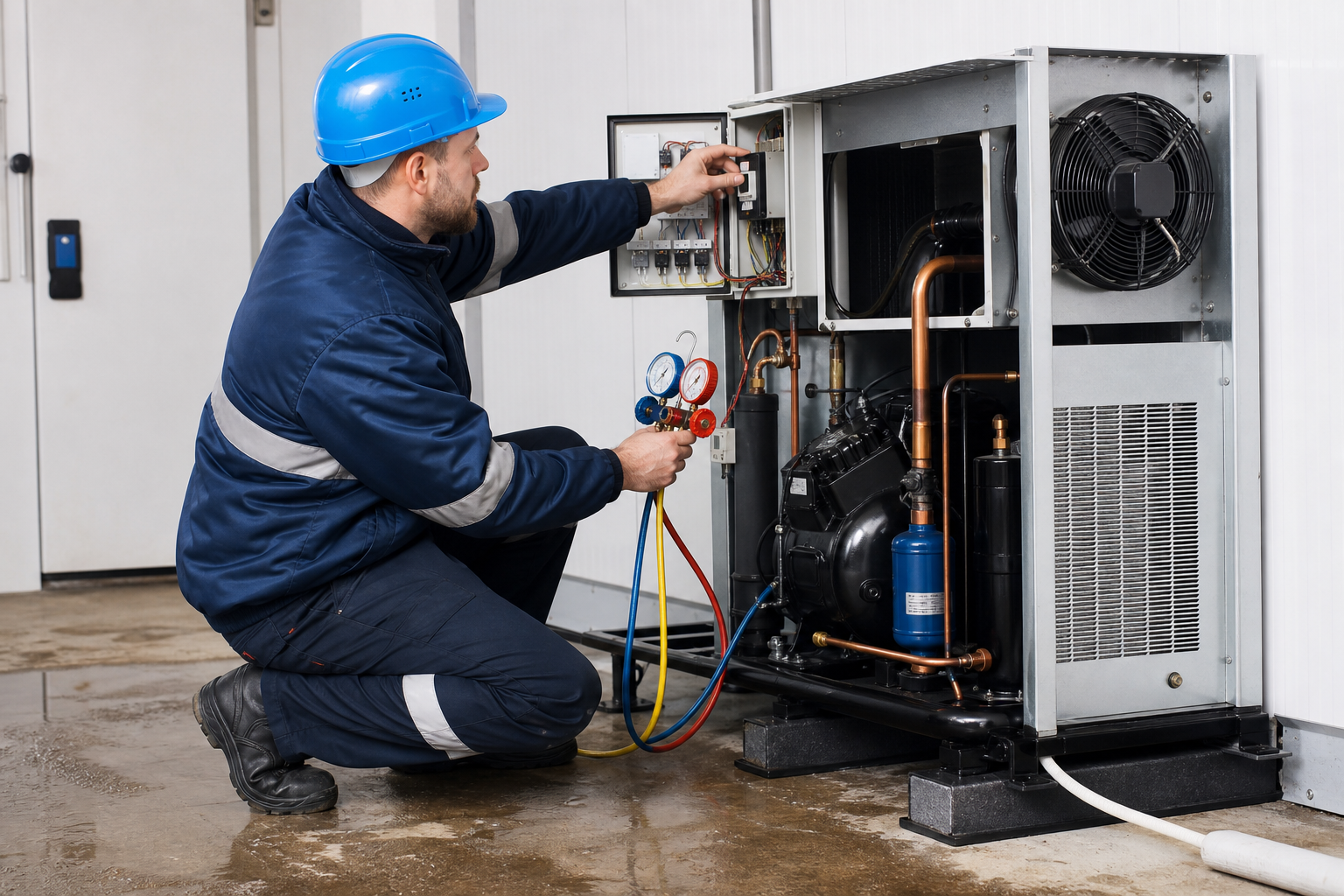
When a compressor is installed on a cold room, the first startup is one of the highest-risk moments for the entire system. Many early failures do not happen because the compressor itself is defective, but because the installation was not checked thoroughly before energizing the unit. For installers and service teams, a structured startup checklist helps protect the compressor, shorten commissioning time and avoid warranty disputes later.
1. Confirm compressor model, refrigerant and oil compatibility
Before power is applied, confirm that the compressor model matches the application temperature range, refrigerant and electrical supply. Also verify the oil type and charge specified by the manufacturer. A compressor that looks similar by capacity alone may still be wrong for the actual duty of the cold room. This first check prevents many avoidable startup problems.
2. Inspect piping, supports and oil return logic
Suction and liquid lines should be correctly supported, insulated where required and laid out with proper attention to oil return. Oversized lines, badly designed risers or missing traps can create lubrication problems that appear only after the room begins operating at load. On multi-component jobs, also check that service valves, sight glass, solenoids and expansion devices are installed in the correct direction and fully ready for operation.
3. Pressure test the circuit and complete a deep evacuation
A new installation or a major compressor replacement should always pass a proper leak test before charging. After that, the circuit needs a deep evacuation that proves the system is dry and stable. Starting a cold room with residual moisture in the system is a common cause of future acid formation, poor valve behavior and unreliable compressor operation.
4. Energize crankcase heating and verify electrical conditions
If the application uses a crankcase heater, give it enough time before startup so migrated refrigerant does not remain in the shell. Measure supply voltage, look for imbalance on three-phase systems and confirm correct phase rotation where required. Contactors, overloads and protection devices should also be checked before the first run. Many startup failures begin on the electrical side, not inside the compressor.
5. Charge carefully and monitor superheat, suction and discharge behavior
During startup, the refrigerant charge should be introduced in a controlled way and the compressor should not be forced to run with unstable conditions. Superheat, suction pressure, discharge temperature, current draw and oil behavior should be observed together. The room may begin cooling even when these values are still wrong, so visible cooling alone is never enough to declare the startup complete.
6. Check controls, defrost strategy and final operating stability
Thermostat settings, pressure controls, fan cycling, defrost logic and anti short cycle delays all influence compressor life. A cold room that starts well but short cycles, defrosts badly or runs with poor evaporator airflow will still expose the compressor to unnecessary stress. Final commissioning should therefore include a stable operating check once the room is closer to real working temperature.
The goal of startup is not just to make the cold room run. The goal is to make it run in a controlled and repeatable way. Taking time to verify model selection, vacuum quality, electrical supply, superheat and control behavior protects the compressor from day one and reduces expensive callbacks later. When a project also depends on fast access to replacement compressors and spare parts, proper startup and correct component sourcing work together as one reliability process.