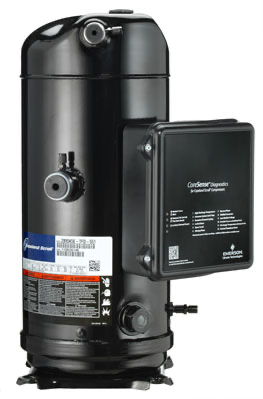
When a Copeland scroll compressor is unusually hot, it is tempting to assume that the compressor has failed. Temperature at the shell or discharge line is instead a symptom that needs context. Replacing the compressor without removing the cause can expose the new unit to the same stress. A safe troubleshooting sequence helps technicians protect the equipment, identify the root cause and decide whether a replacement is genuinely required.
1. Confirm the measurement and the operating condition
Measure with suitable instruments at repeatable locations and allow the system to reach a stable operating condition. Record suction and discharge pressure, line temperatures, current draw, ambient conditions and the state of fans and controls. A single infrared reading on an unprepared surface is not enough to establish a diagnosis. Compare the readings with the applicable manufacturer information for the exact model and refrigerant.
2. Investigate excessive compression ratio
High condensing pressure and low suction pressure can combine to create a severe compression ratio. Dirty condenser surfaces, weak condenser fans, recirculating hot air, blocked airflow or high ambient temperature can raise the high side. A starved evaporator, restricted liquid supply or poor evaporator airflow can pull the low side down. The discharge-temperature complaint must therefore be checked on both sides of the system.
3. Review refrigerant feed and suction superheat
Low refrigerant charge, restrictions, a misadjusted expansion device or unstable liquid feed can reduce mass flow through the compressor and increase superheat. The correct response is not to add refrigerant blindly. Confirm liquid line condition, receiver and filter-drier condition where fitted, evaporator airflow and control behavior. The aim is to establish whether the compressor receives stable dry vapor under normal load.
4. Check airflow at both heat exchangers
A blocked condenser can raise condensing temperature, while a dirty evaporator, ice accumulation, failed fan or obstructed return path can reduce the load and distort suction conditions. Inspect coils, fan motors, rotation, guards, filters and air paths before changing compressor components. Air-side faults are common and can make a healthy scroll compressor appear to be the problem.
5. Verify electrical quality and control sequence
Measure voltage under load and inspect terminals, contactors and protective devices. In three-phase applications, verify phase balance and correct rotation where applicable. Also confirm that the compressor is not being forced into rapid restarts, abnormal pump-down or a control sequence outside the intended application. Electrical and control faults can create heat stress that pressure readings alone do not explain.
6. Decide on replacement only after the root cause is controlled
Signs such as contaminated oil, repeated internal protection, abnormal noise, failed windings or loss of pumping capacity may justify replacement, but they should be assessed alongside the system fault. If replacement is needed, collect the full model code, refrigerant, electrical supply, application conditions and clear nameplate photographs. This helps identify a suitable Copeland scroll option and the accessories needed to protect it at recommissioning.
High discharge temperature deserves a methodical response: stabilize the system, confirm the readings, inspect heat exchange and refrigerant feed, and check electrical and control conditions. This approach reduces unnecessary replacements and gives a new compressor the best chance of reliable service. For a fast quotation, send RCP the model details and the diagnostic information gathered on site.