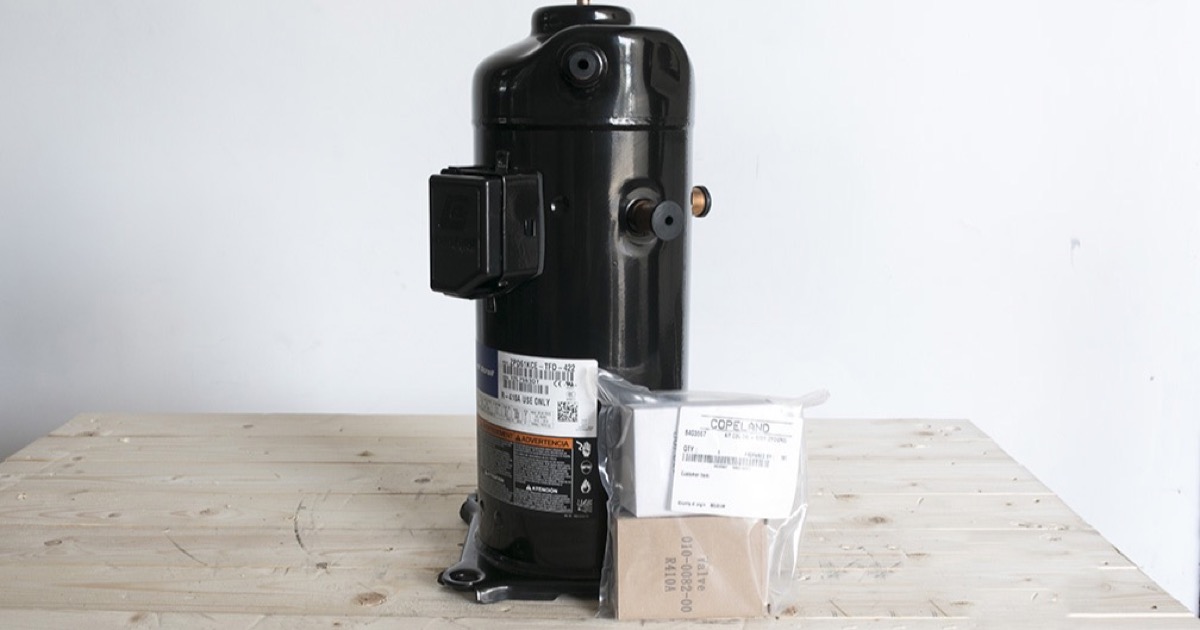
Short cycling and repeated protection trips are among the most frustrating service calls on Copeland scroll systems. The compressor may be blamed first because it is the component that stops, overheats or trips out. In practice, however, many of these cases begin with control logic, unstable load conditions or electrical supply problems elsewhere in the system. A disciplined diagnosis helps installers and service technicians avoid unnecessary replacement and restore reliable operation faster.
1. Identify which protection is actually opening
The first step is simple but often skipped: determine whether the stop is coming from internal overload, high pressure control, low pressure control, phase protection, contactor dropout or an external controller. Different trips create similar complaints, but they do not have the same cause. Without identifying the exact protection path, technicians can waste time adjusting refrigerant or replacing parts that are not responsible for the shutdown.
2. Check for control settings that force frequent restarts
Poor thermostat differential, no anti short cycle delay, weak sensor placement or aggressive low-pressure pump-down logic can make a Copeland scroll restart far too often. Some systems cool the space correctly but still punish the compressor with excessive starts per hour. Even when the compressor survives, repeated cycling increases stress on electrical components and usually hides a control problem that should be corrected rather than tolerated.
3. Review airflow and heat rejection before condemning the compressor
Dirty condensers, blocked evaporators, failed fan motors or poor room airflow can shift pressures enough to create nuisance trips. High condensing pressure or unstable evaporator conditions may look like a compressor fault because the trip happens at the compressor. In reality, the compressor is often reacting to heat exchange problems that should be found on the air side first.
4. Verify charge behavior, superheat and liquid management
An overcharged or undercharged system, incorrect superheat setting, liquid floodback or poor pump-down behavior can all push the Copeland scroll into unstable operation. A compressor that starts wet, runs briefly and then stops on protection may actually be exposing a feed-control problem rather than an internal defect. Looking at charge behavior together with superheat and control sequence usually reveals more than checking one pressure reading alone.
5. Inspect electrical quality and three-phase conditions
Voltage imbalance, weak terminals, aging contactors, missing phase protection or poor supply stability can create hot starts and nuisance overload trips. On three-phase scroll compressors, electrical verification should include actual measured voltage on each leg and the condition of the switching components under load. The compressor may be the part that trips, but the electrical stress often starts upstream.
6. Confirm capacity logic against real system load
Some short cycling problems are built into the system design. Oversized capacity, low system volume, poor staging logic or load conditions that swing sharply can make stable compressor operation difficult. In digital or tandem Copeland scroll applications, incorrect capacity control strategy can also create cycling behavior that looks like a hardware fault. The final diagnosis should therefore compare compressor behavior with real load profile, not only with nameplate data.
The practical takeaway is that a Copeland scroll that short cycles or trips repeatedly is not automatically a failed compressor. It is often a system that has lost control stability. Finding the exact protection path, checking airflow and electrical quality, and reviewing charge and load logic usually produce a faster and cheaper solution than replacing the compressor first. When replacement or spare parts are still required, that diagnosis also helps ensure the next component is not exposed to the same unresolved condition.