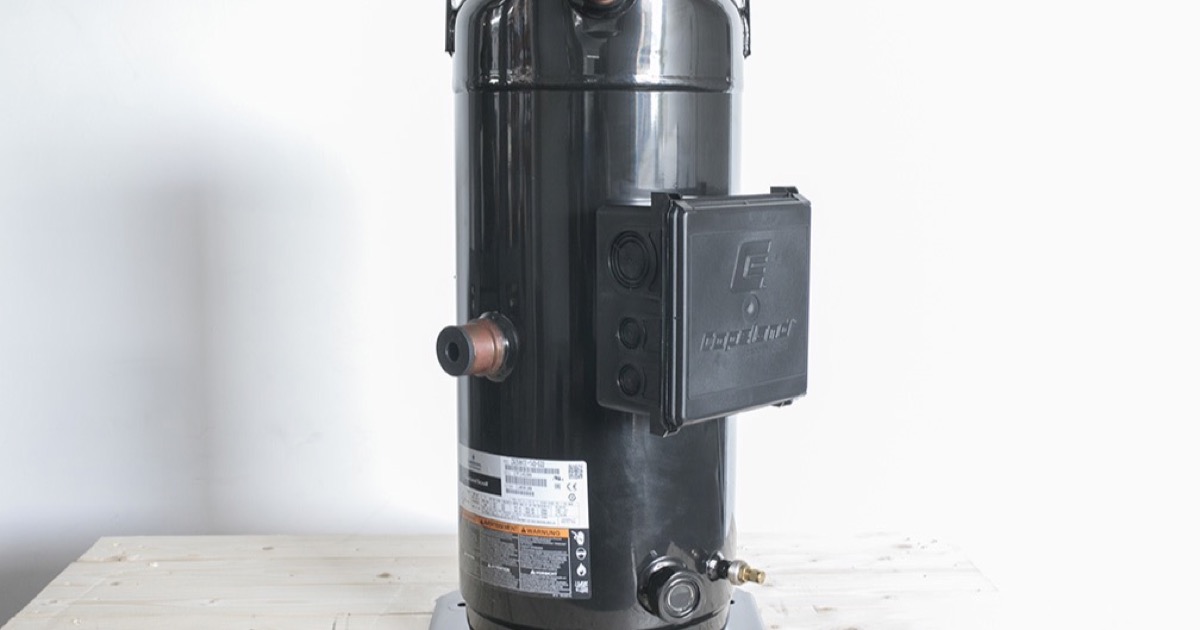
Copeland scroll compressors usually tolerate day-to-day load changes well, but they still depend on stable suction conditions to run efficiently and survive over time. In the field, many performance complaints are not caused by a defective compressor. They start with unstable superheat, poor return gas cooling, weak evaporator airflow or piping conditions that disturb oil return. For installers and service technicians, a practical optimization routine after startup often prevents nuisance alarms, low capacity and premature wear.
1. Stabilize the system before judging superheat
Superheat should never be evaluated while the evaporator is still hunting heavily, doors are open continuously or the room has not reached a more stable load condition. On a Copeland scroll, reacting too early to unstable readings often leads to an expansion setting that is either too aggressive or too conservative. Before changing anything, let the system settle and confirm that suction pressure, room load and evaporator airflow are reasonably stable.
2. Measure superheat where it tells the real story
Field readings are only useful when the pressure and temperature measurements are taken correctly and at meaningful points. A reading taken too far away from the evaporator, on a poorly insulated line or on a line carrying mixed conditions can mislead the diagnosis. The goal is not only to record a number, but to understand whether the compressor is receiving dry vapor consistently and whether the evaporator is being fed efficiently.
3. Check return gas cooling, not only suction pressure
Copeland scroll compressors depend on return gas conditions for motor and shell cooling in many applications. A technician who looks only at suction pressure can miss a compressor that is actually running too hot. High return gas temperature, poor suction insulation, low evaporator airflow or excessive compression ratio can all push the compressor into a hotter and less forgiving operating condition even when the system still appears to cool.
4. Review evaporator airflow and load distribution
If the evaporator airflow is restricted by dirty coils, weak fan motors, ice, blocked discharge paths or poor product loading, the superheat behavior becomes misleading. The expansion device may appear to be the problem while the real issue is heat exchange instability. On cold rooms and process applications, uneven load distribution across the evaporator can also create misleading suction behavior that eventually affects the Copeland scroll at the compressor end.
5. Confirm suction line insulation and oil return logic
A well-set superheat value does not solve everything if the suction line is poorly insulated or the piping layout traps oil. Heat gain into the suction line raises return gas temperature and reduces the cooling margin at the compressor. At the same time, long risers, oversized lines or poor trap design can disturb oil return and add another reliability problem. Optimization should therefore include both thermodynamic checks and piping reality.
6. Verify the system under real operating load
Final adjustments should be checked again after the room or process approaches normal working conditions. A Copeland scroll that looks acceptable during light load startup may behave very differently once the condensing temperature rises or product load increases. Superheat, discharge temperature, current draw and room pull-down behavior should be reviewed together before the job is considered complete.
The installer’s advantage is simple: optimizing a Copeland scroll is rarely about one isolated number. It is about confirming that feeding, return gas cooling, airflow and oil return all support the compressor at the same time. That extra discipline improves efficiency, reduces callbacks and helps the system reach stable performance sooner. When a project also needs fast access to replacement Copeland scroll compressors or spare parts, correct optimization in the field protects that investment from the first weeks of operation.