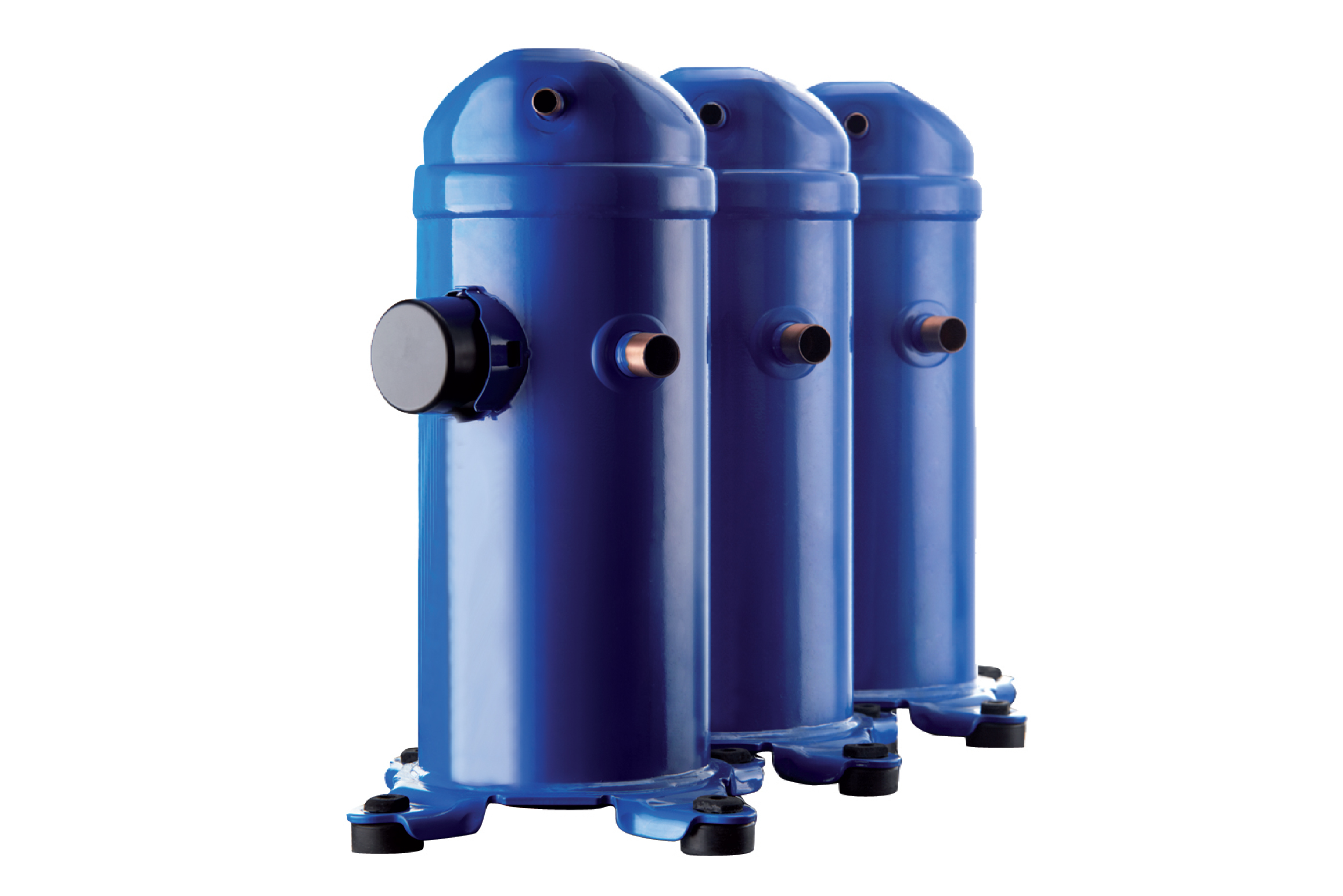
A replacement or new-project compressor decision is often made under time pressure. A nameplate capacity alone is not enough to select a Danfoss scroll compressor safely for commercial HVAC. The correct choice must fit the refrigerant, voltage and frequency, real evaporating and condensing conditions, and the intended cooling or heating duty. A structured check before ordering protects delivery time, commissioning and the compressor investment.
1. Start with the exact application and duty point
Identify whether the system is air conditioning, a reversible heat pump, process cooling or another commercial HVAC application. Record the normal and worst-case evaporating and condensing conditions, not only the nominal capacity. Ambient temperature, coil condition, airflow and load profile all affect the duty point. The compressor must remain inside its approved operating envelope in the conditions the equipment will actually see.
2. Match the refrigerant and the approved envelope
Do not assume that similar-looking scroll compressors are interchangeable across refrigerants. Check the original compressor information and the manufacturer application data for the refrigerant and oil requirements. A replacement decision should also consider the system refrigerant strategy and local service requirements. Using a compressor outside its approved envelope can create reliability problems even when pipe connections and basic capacity appear suitable.
3. Verify electrical data before comparing models
Voltage, phase, frequency, starting method and protection arrangement must agree with the installation. For three-phase systems, confirm the supply quality and phase protection; for single-phase applications, verify the starting components specified for the selected unit. Electrical compatibility is not an afterthought: contactors, cable sizing, controls and inverter arrangements can determine whether a replacement starts and runs correctly.
4. Check capacity at the real rating condition
Capacity comparisons should use the relevant rating condition rather than a broad horsepower or nominal-tonnage shortcut. Review cooling or heating duty, expected part-load operation and the system control strategy. In variable-capacity or inverter applications, confirm the approved compressor and drive combination. A unit that is too large can cause unstable cycling, while one that is too small may run continuously and compromise comfort or process temperature.
5. Compare mechanical and installation details
Before ordering, compare mounting footprint, height, suction and discharge connection positions, electrical terminal layout and required accessories. Confirm crankcase heater, sound cover, accumulator, check valve or control components where the application calls for them. A careful physical review prevents an urgent replacement from becoming a site modification problem.
6. Preserve the commissioning checks
After installation, the work is not complete at startup. Check rotation where applicable, measured voltage, current draw, suction and discharge conditions, airflow and control sequence. Record stable operating values and verify that the system does not return liquid or run at an excessive compression ratio. These checks help protect the new Danfoss scroll compressor and provide a useful reference for later service.
The best selection process combines the original data with actual site conditions. If the nameplate is incomplete, provide clear photos, refrigerant information, electrical data and the application details when requesting a quote. RCP can help identify an appropriate Danfoss scroll compressor or replacement option, while the final selection should always be confirmed against the relevant manufacturer documentation and the system requirements.