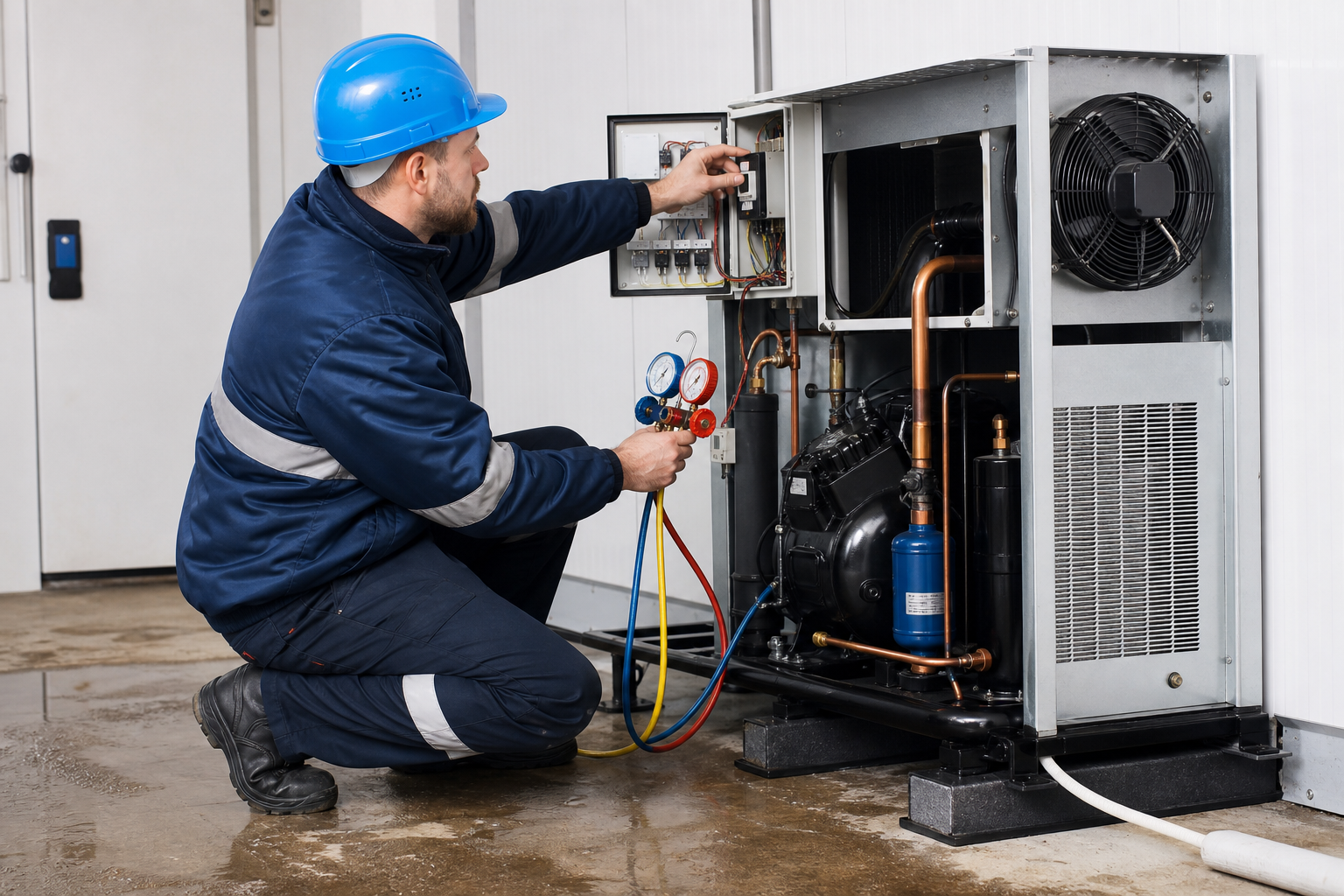
Liquid slugging is one of the most dangerous conditions a refrigeration compressor can face. Compressors are designed to compress vapor, not large amounts of liquid refrigerant. When liquid reaches the compression chamber, the result can be violent mechanical stress, broken components and a failure that seems sudden even though the system often showed earlier warning signs. For service teams, understanding slugging is essential before replacing a compressor and sending the system back into the same fault.
1. What liquid slugging means in practice
Liquid slugging happens when refrigerant returns to the compressor in a liquid state or in a quantity that the compressor cannot safely manage. In reciprocating compressors, this can damage valves, pistons and connecting parts. In scroll compressors, it can create severe stress on scroll elements and bearings. The exact failure mode changes by compressor design, but the basic problem remains the same: incompressible liquid is entering a machine built for vapor compression.
2. Common symptoms before complete failure
Systems affected by slugging often show hard starts, abnormal noise, repeated protection trips, unstable oil behavior, broken reeds, diluted oil or rapid mechanical wear. Sometimes technicians find frost on the compressor shell or on the suction line close to the compressor, but visual signs alone are not enough for diagnosis. The important point is that a burned or noisy compressor should not automatically be treated as an isolated component failure without checking for liquid return conditions.
3. Frequent root causes in refrigeration systems
Several system faults can push liquid back to the compressor. Low superheat, badly adjusted expansion valves, oversized valves, fan failures on the evaporator, poor airflow, defrost issues and sudden load changes are common examples. Floodback after defrost or during low load operation is especially dangerous in cold rooms and freezer applications. Incorrect piping, missing suction accumulators or poor oil return design can make the situation worse by allowing liquid and oil problems to reach the compressor together.
4. Checks to make before replacing the compressor
If slugging is suspected, replacing the compressor alone is not enough. The service team should verify superheat settings, evaporator airflow, defrost sequence, control logic, piping layout, accumulator condition and refrigerant charge behavior. Oil condition also matters because diluted or foamed oil often shows that refrigerant has been mixing with the lubricant. A replacement compressor installed without these checks may fail again very quickly, creating unnecessary cost and repeated downtime.
5. How to reduce the risk of future slugging
Prevention depends on system control and correct application practice. Stable superheat, proper valve selection, reliable fan operation, correct defrost management and careful startup procedures all help protect the compressor. In some applications, suction accumulators and crankcase heaters also play an important role. The wider lesson is that compressor protection is not only about the compressor itself. It is about keeping the whole refrigeration system stable enough that liquid does not return where only vapor should be present.
Liquid slugging is a technical problem, but it also has a clear commercial impact because it can lead to repeated compressor replacements, product loss and avoidable service calls. If your system shows signs of slugging and you need support identifying a compatible replacement compressor or related spare parts, you can request a quote from RCP for targeted assistance.