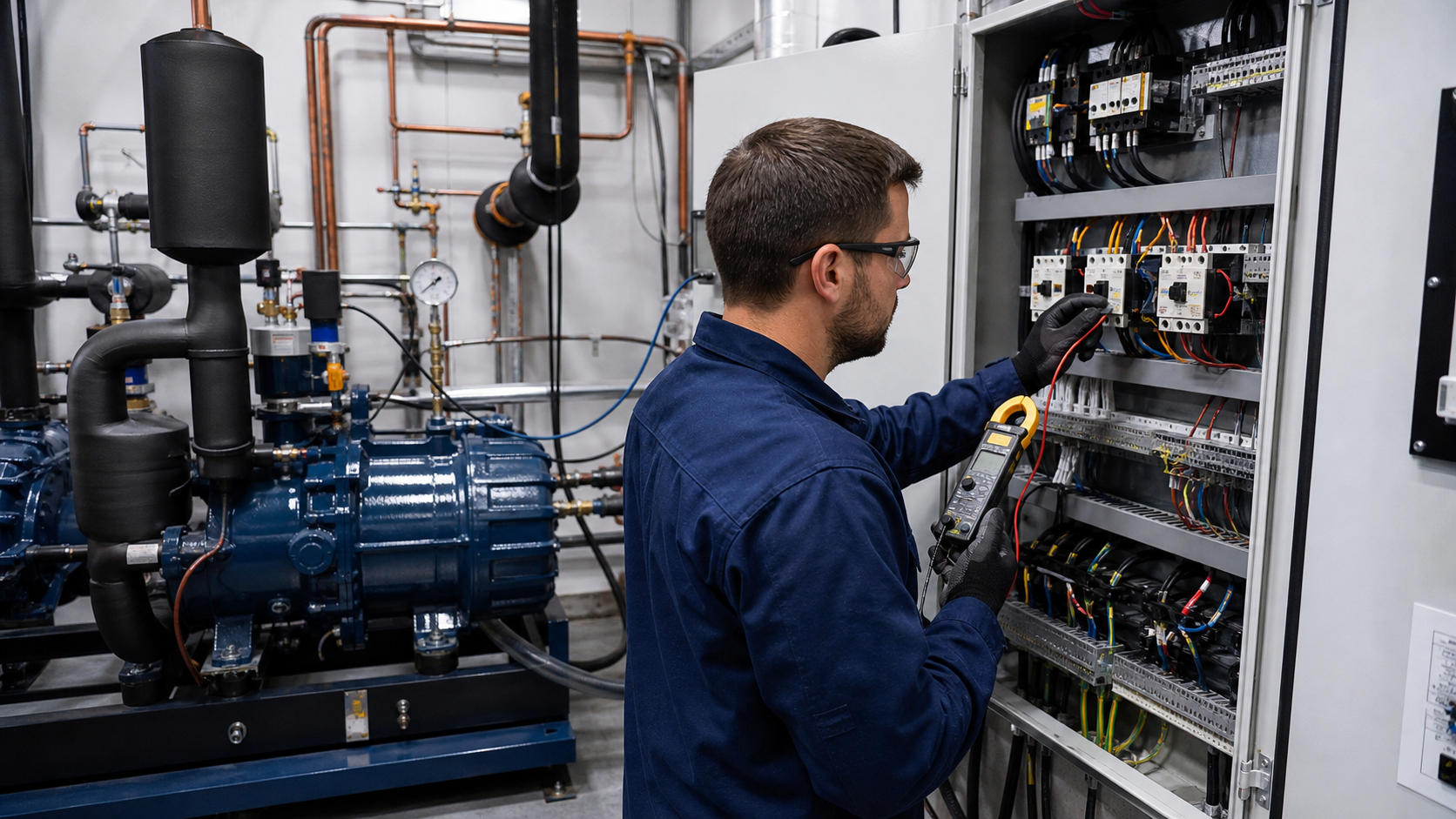
When a refrigeration compressor does not start, the contactor is often blamed immediately. It is an important switching component, but replacing it without a measured diagnosis can hide loose terminals, control faults, voltage problems or an overloaded compressor. Electrical work must be carried out by qualified personnel using the manufacturer documentation and safe isolation procedures.
Confirm the exact symptom before testing
Establish whether the contactor coil is being commanded, whether it pulls in, whether all poles close and whether the compressor draws current. A humming coil, chattering contactor, welded contacts and a contactor that never receives a control signal are different faults with different causes. Record the sequence before changing settings or parts.
Check supply, control voltage and connections
Measure supply voltage and phase balance under load where applicable. Then verify the coil’s rated control voltage, fuses, safety chain, control relay and terminal tightness. Heat marks or discoloration can indicate high-resistance joints, but the upstream cause still needs investigation. Never bypass pressure or overload protection to make a compressor run.
Inspect the contactor and overload in context
Contacts can wear, pit or weld after excessive starts, poor coil voltage or high current. Check that the contactor rating and overload setting are suitable for the compressor and that auxiliary contacts are working. If the overload trips, compare actual current with the compressor data and investigate mechanical load, refrigeration pressures and voltage quality before resetting repeatedly.
Prevent repeat electrical failures
Correct cable sizing, clean terminals, stable controls and anti-short-cycle delays extend contactor life. If a replacement compressor, contactor, overload or terminal kit is needed, RCP can help identify compatible parts from the complete model and electrical information, reducing the risk of an incomplete repair.