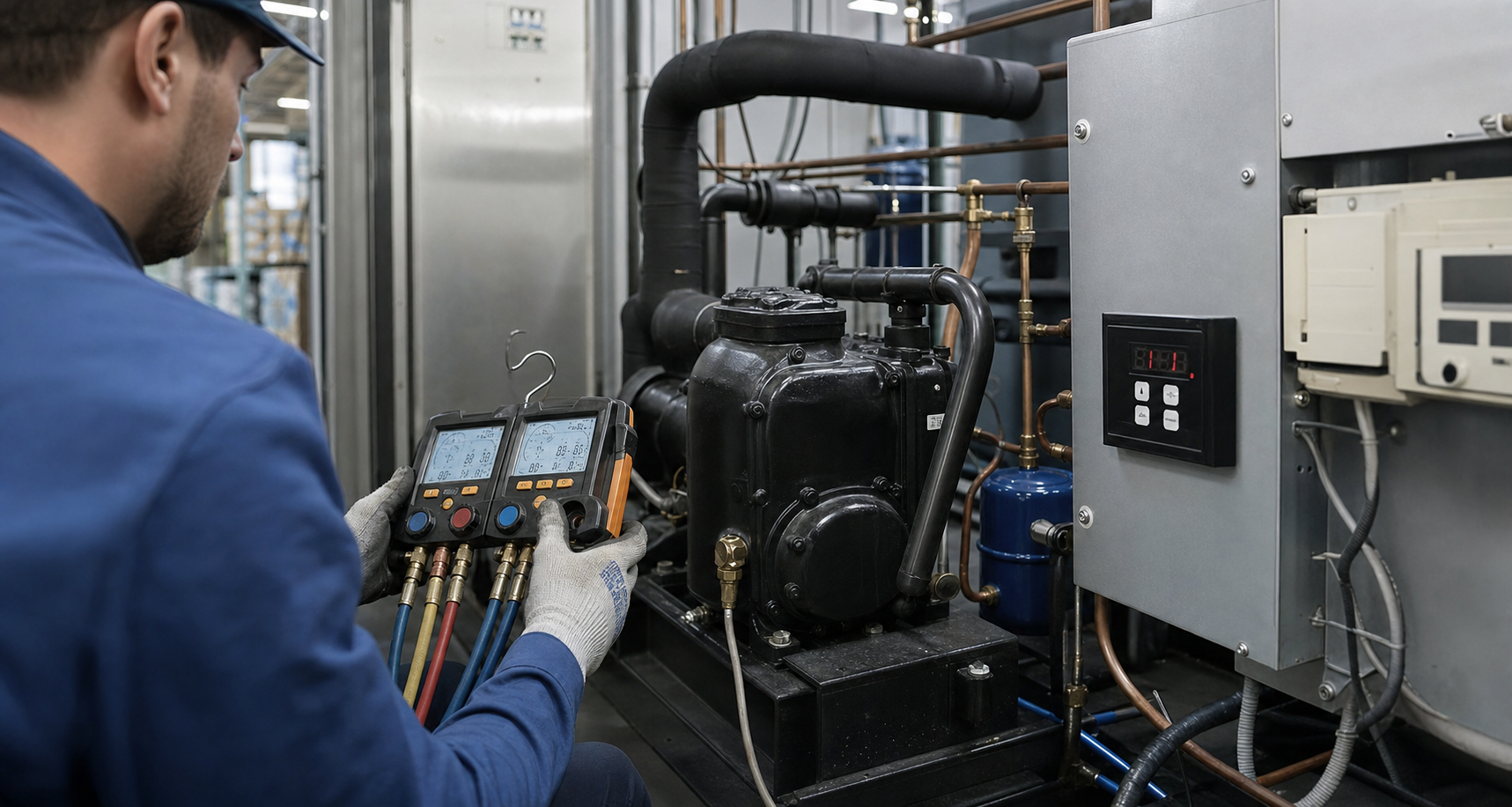
Low suction pressure is one of the most frequent alarms and complaint patterns in commercial refrigeration. Because the evaporating side is directly connected to cooling performance, the first reaction is often to suspect a damaged compressor. In practice, many low suction cases start elsewhere in the plant. Replacing the compressor before checking load, airflow and refrigerant feed can leave the real fault untouched and expose the new unit to the same stress from the first day.
1. Confirm the complaint under stable operating conditions
Before diagnosing the compressor, check whether the pressure reading was taken during pull down, after defrost, during low room load or under another temporary condition. Suction pressure must be interpreted together with room temperature, evaporator condition and compressor running time. A pressure that looks too low during a short transient may be normal once the installation stabilizes.
2. Inspect evaporator airflow and real load on the cold side
Dirty evaporators, iced coils, stopped fans, blocked product passages or low air movement can all starve the evaporator and pull suction pressure down. In those cases the compressor may be reacting normally to a weak load rather than creating the problem. A proper check therefore starts on the evaporator side, especially in cold rooms and cabinets where airflow problems are common and easy to miss.
3. Check refrigerant feed, liquid line restrictions and charge condition
Low suction pressure is often linked to underfeeding. A restricted liquid line, partially blocked filter drier, unstable solenoid valve, insufficient charge or flashing before the expansion device can reduce refrigerant supply to the evaporator. Sight glass behavior, subcooling and temperature drop across suspect components help identify whether the issue is really on the feed side rather than inside the compressor.
4. Review expansion valve control and superheat behavior
If the expansion valve is set too tight, hunting badly or losing control because of bulb mounting or insulation problems, the compressor may run with low suction and high superheat at the same time. That combination often points to a control and feeding issue rather than to immediate compressor failure. Digital controls and electronic valves should also be checked for sensor accuracy and command logic.
5. Compare suction pressure with discharge temperature, current and cycling
A weak compressor and a starved evaporator do not always produce the same overall picture. Suction pressure should be evaluated together with discharge temperature, compressor current draw, compression ratio and cycling pattern. If suction is low but the compressor also runs hot, short cycles or trips on protection, the investigation must connect both sides of the circuit instead of isolating a single symptom.
6. Replace the compressor only after the root cause is clear
If mechanical wear, broken valves or loss of pumping capacity are truly present, compressor replacement may be necessary. But that conclusion should come only after evaporator load, refrigerant feed, controls and operating conditions have been checked carefully. A good diagnosis protects the replacement unit, avoids repeat failures and makes the quote for compressor and spare parts far more accurate.
The practical rule is simple: low suction pressure is a system symptom before it is a compressor verdict. Service teams that confirm the operating condition, inspect airflow, verify refrigerant feed and compare the full set of pressures and temperatures usually make better technical decisions and avoid unnecessary downtime. When replacement is still required, that structured troubleshooting also speeds up the sourcing process.