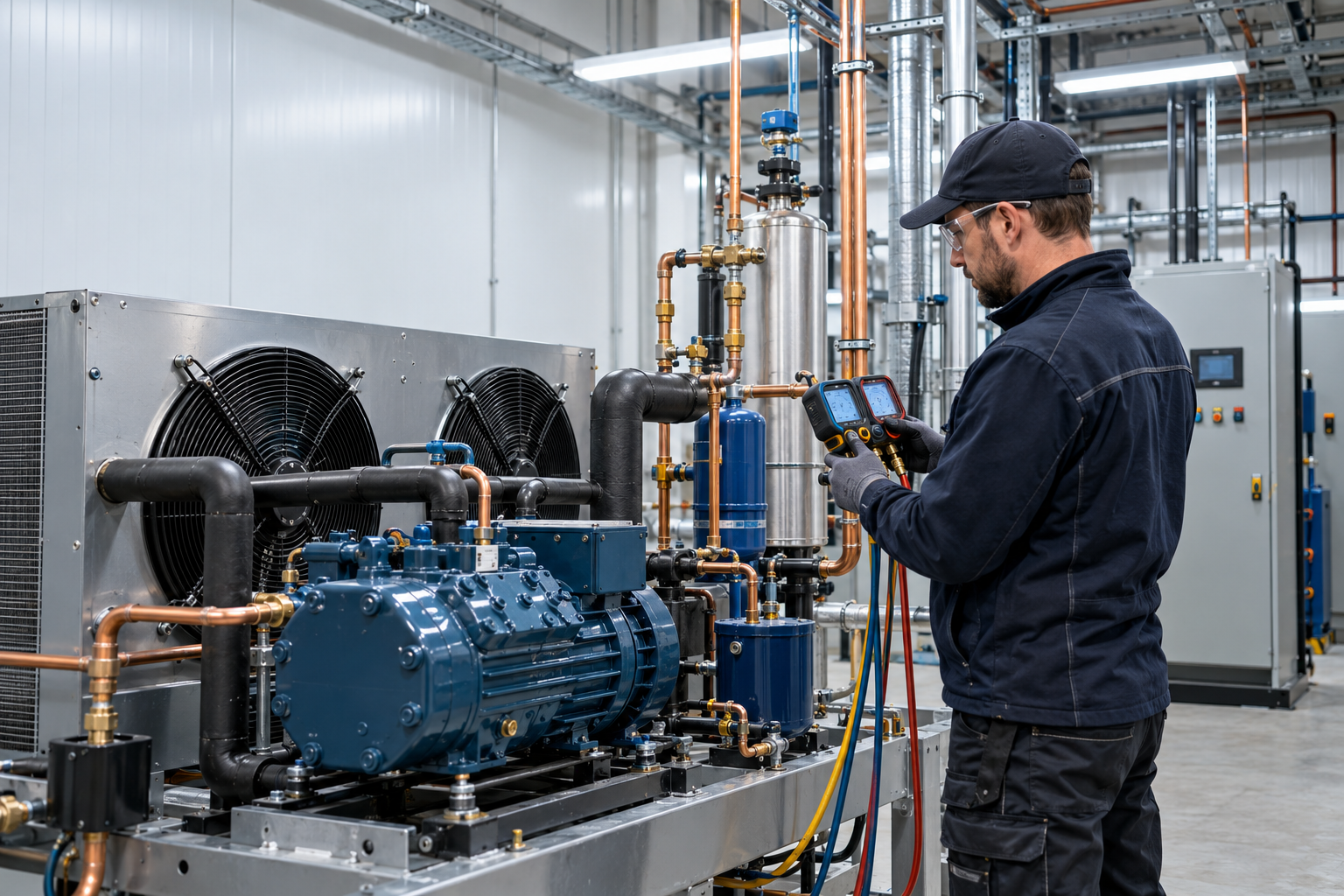
Commissioning is where a refrigeration installation becomes a reliable working system. A unit can pull down temperature on its first run and still consume excessive power, cycle too often or expose the compressor to avoidable stress. A recorded, methodical handover gives the installer, operator and service team a useful baseline for future diagnosis.
Verify the installation before charging and start-up
Confirm the selected compressor, refrigerant, electrical supply and control components match the approved application. Check pipe supports, insulation, oil management, airflow paths, fan rotation, leak-test results and evacuation records. Clean coils and unrestricted condenser air are not finishing details: they directly affect condensing pressure and compressor power.
Record stable operating readings
After the system has stabilised under a representative load, record suction and condensing pressures, superheat, subcooling, discharge temperature, current draw, voltage and room temperature. Compare the readings with the compressor operating envelope and the design conditions. One measurement is not a diagnosis, but a complete baseline makes later changes visible.
Set controls to protect temperature and equipment
Verify thermostat differential, pressure controls, defrost sequence, fan control and anti-short-cycle delay. Confirm every safety device is correctly wired and tested without bypassing protection. Controls should maintain the product temperature with stable run times, not force the compressor to restart repeatedly.
Close the handover with service-ready information
Leave the model numbers, refrigerant type, electrical data, setpoints and recorded readings with the customer. If a replacement compressor, electrical component or compatible spare part is required, RCP can help identify it from the complete application and nameplate information before ordering.