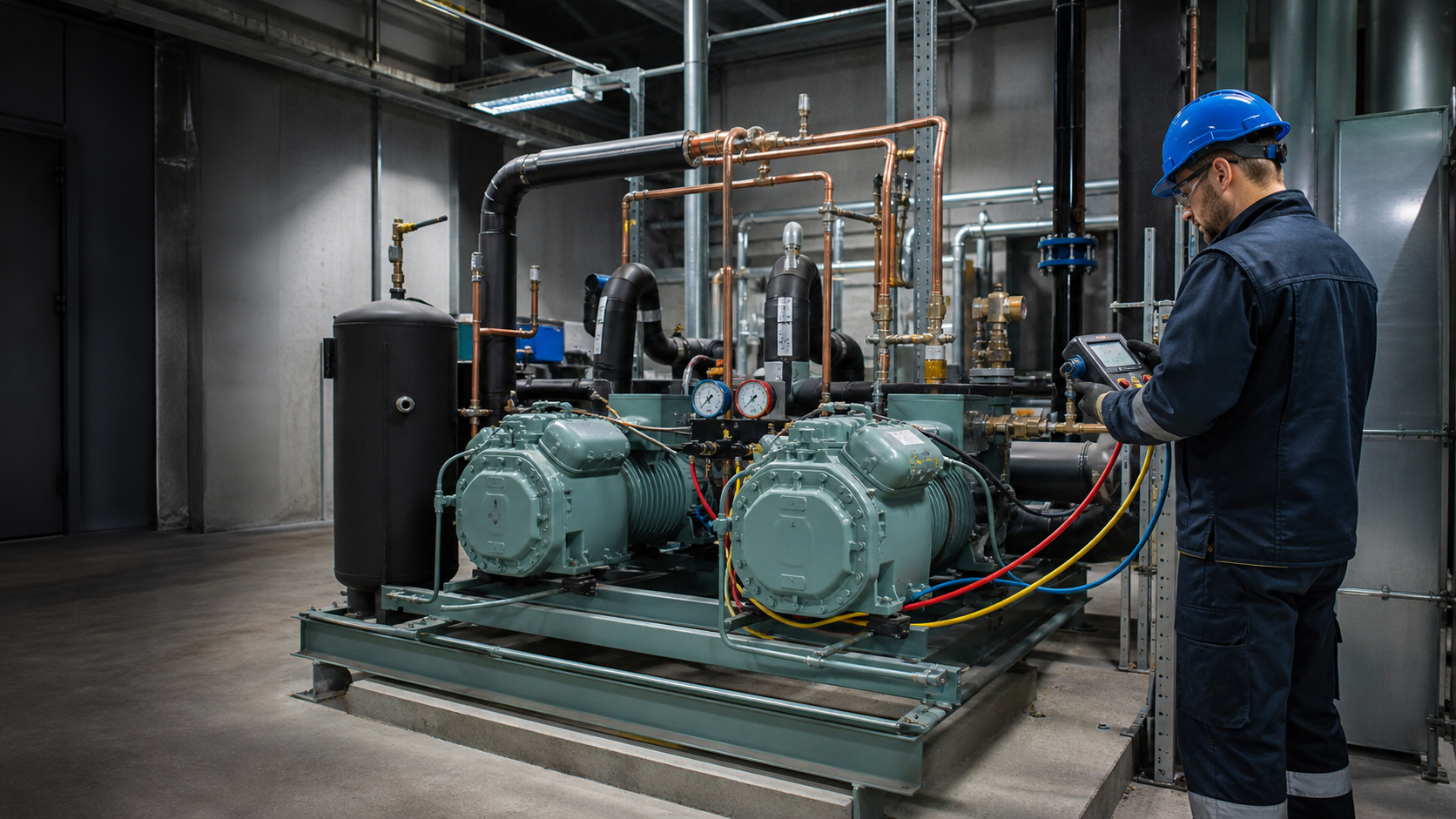
Energy use in commercial refrigeration is rarely controlled by one component alone. A system can maintain the required temperature and still waste power through excessive condensing pressure, poor airflow, unstable controls or an incorrectly matched compressor. A structured review gives service teams a practical way to reduce running cost while protecting the equipment.
Start with the operating conditions, not the nameplate
Record suction and condensing pressures, superheat, subcooling, discharge temperature, current draw and room temperature during a stable load period. Compare these values with the design conditions and manufacturer envelope. This turns “the system uses too much energy” into a measurable technical question and avoids changing parts based on a single reading.
Improve heat exchange before changing the compressor
A dirty condenser, weak fan, blocked evaporator or poor air circulation forces the compressor to work at a less efficient pressure ratio. Clean coils, verify fan rotation and airflow, check defrost performance and keep condenser air paths unobstructed. Lowering unnecessary condensing pressure is often one of the fastest ways to reduce compressor power consumption.
Stabilise charge, superheat and controls
Incorrect charge, an unstable expansion valve or poorly placed sensors can make capacity and power draw fluctuate. Verify the refrigerant charge by the approved procedure, set superheat for the application and review thermostat differentials, pressure controls and anti-short-cycle delays. Good control stability prevents frequent starts and avoids running the compressor outside the conditions it was selected for.
Match the replacement compressor to the real duty
When a replacement is required, capacity alone is not enough. Refrigerant, evaporation and condensation range, electrical supply, oil, application type and control strategy must all match. RCP can help identify compatible refrigeration compressors and related spare parts from the actual model data, so an energy-saving correction does not create a new reliability problem.