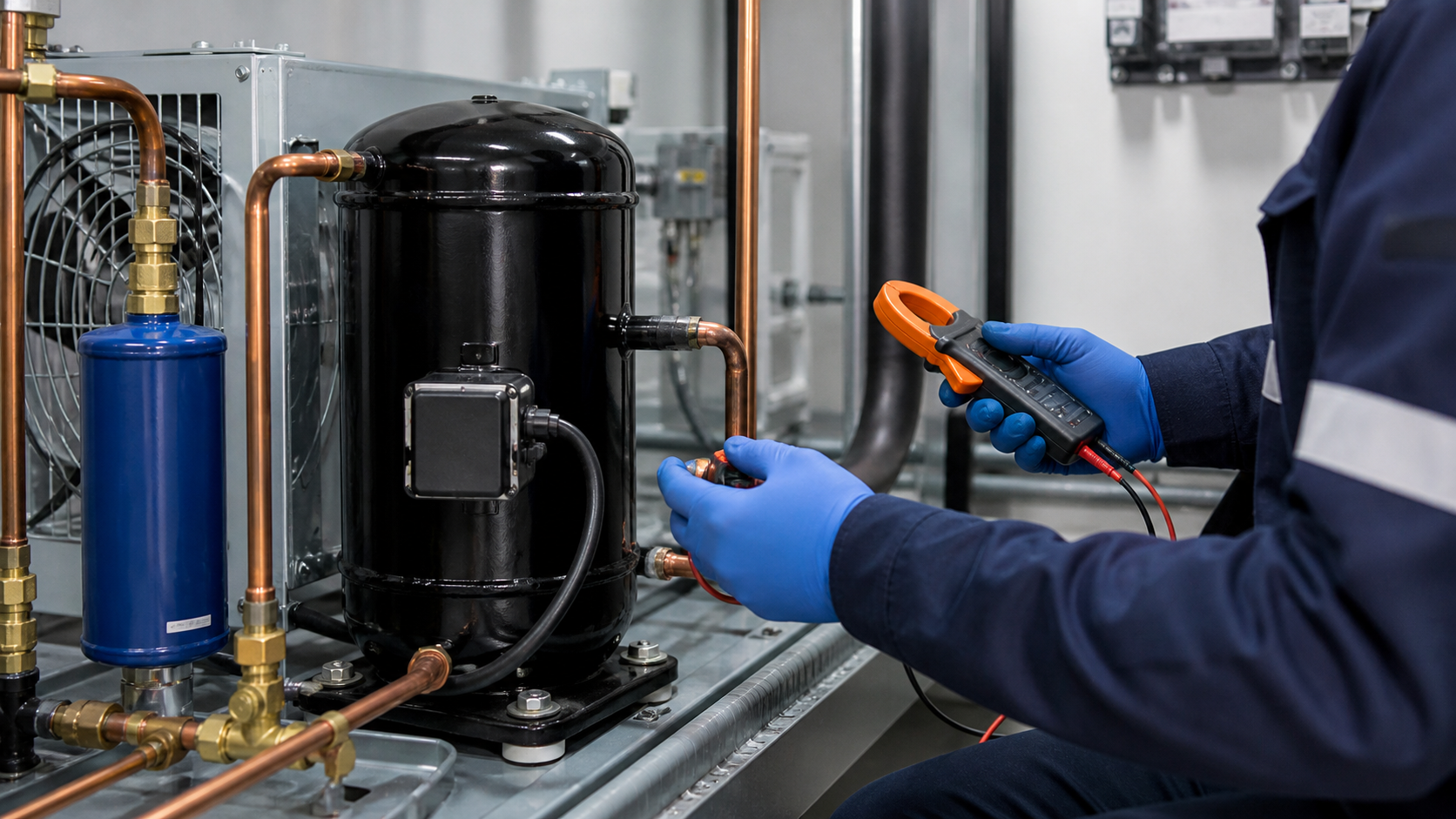
A hot scroll compressor or discharge line deserves a systematic investigation. Shell temperature alone does not prove compressor failure, and replacing a unit before the underlying system fault is corrected can lead to a repeat failure. The practical goal is to stabilize the equipment, record meaningful measurements and find out why the compressor is operating outside normal conditions.
Confirm the operating condition first
Use suitable instruments at repeatable points and let the system reach a stable load. Record suction and discharge pressure, line temperatures, current, voltage under load, ambient temperature, fan status and control sequence. Compare the results with the documentation for the exact compressor model and refrigerant. An isolated infrared reading cannot establish a complete diagnosis.
Look for excessive compression ratio
High condensing pressure and low suction pressure can combine to increase compression work and discharge temperature. Dirty condenser coils, failed fans, hot-air recirculation, restricted airflow or high ambient temperature can raise the high side. A starved evaporator, restricted liquid line, icing or poor evaporator airflow can lower suction. Check both sides of the refrigeration system rather than focusing only on the compressor.
Review refrigerant feed and return gas
Low charge, a restriction, a misadjusted expansion device or unstable liquid feed can reduce mass flow and raise suction superheat. Do not add refrigerant without evidence. Inspect liquid-line components, evaporator condition, airflow and controller behavior. The compressor should receive stable dry vapor within the approved application limits; both excessive superheat and liquid return can shorten its life.
Check electrical supply and controls
Measure voltage under load and inspect terminals, contactors, protective devices and cable condition. In three-phase systems, verify phase balance and correct rotation where applicable. Also look for rapid cycling, incorrect pump-down, failed fan interlocks or control settings that force operation outside the intended duty. Electrical and control defects can create heat stress that pressure readings alone do not reveal.
Prevent a repeat failure
After the root cause is corrected, commission carefully: confirm stable pressures and temperatures, current draw, airflow, defrost and control sequence. Investigate oil contamination or acid after a serious electrical failure and follow the applicable cleanup procedure before installing a replacement. For support with a scroll compressor or accessories, send RCP the model code, refrigerant, electrical data, application and site measurements. The final selection and service work should follow manufacturer documentation and qualified refrigeration practice.